
The Sound of Gratitude
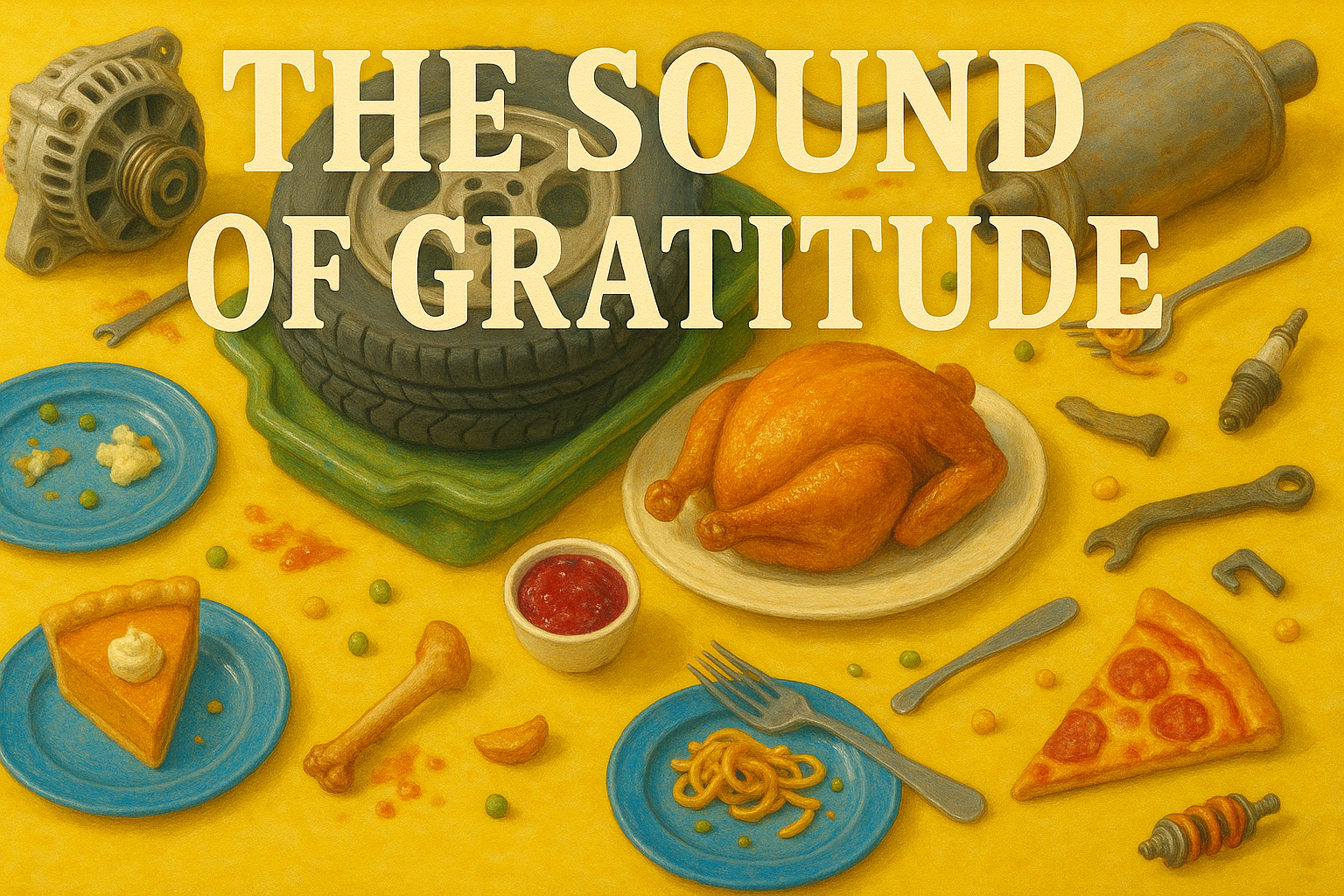
Thanksgiving is this week. It’s a holiday that hits every one of our five senses.
We see the people we love.
We smell the kitchen, that perfect mix of turkey, butter, and even something slightly burnt.
We taste the meal we’ve waited all year for.
We feel the hugs, the warmth, a favorite chair.
In each of these we find thankfulness.
But what does gratitude sound like on Thanksgiving?
Maybe it’s laughter from the next room, kids arguing over who gets the wishbone, football on the TV, the scrape of forks on plates, or even the sappy music from the first of many predictable Hallmark movies.
Sometimes gratitude hides in these routine noises of the day.
Gratitude sounds different in the junkyard. It clanks.
When I was a kid, the junkyard was never quiet. It had its own orchestra: tools dropped on concrete, a blowtorch hissing, an echo from scrap metal landing on a pile.
To most people it was just noise. To us, it was work and, believe it or not, hope. Yes, hope.
Every sound meant something was being salvaged. A part pulled from one dead car might give another a few more years of life. We refused to waste what still had value. Every clang was a kind of resurrection.
In that way, Thanksgiving and the junkyard share the same spirit. Both are about leftovers, whether they’re brake drums or mashed potatoes. Leftovers are saved.
Think about the sounds of leftovers. Pots and pans clatter, the fridge door slams, foil crinkles. Somebody scrapes what’s left of the stuffing into a container. The sound is domestic redemption, a second life for the scraps.
The junkyard and the kitchen share the same theology: nothing worth saving should be tossed aside.
In both places, you can hear grace if you stop long enough to notice. The scrape of a spatula, the whir of a drill, the pop of a jar lid, the revving of an engine.
Junkyard parts and Thanksgiving leftovers are abundance reimagined. The meal is over, but the gifts keep showing up in sandwiches and soups and snacks. Neither is glamorous, but both are proof that God’s economy wastes nothing.
Gratitude, then, doesn’t always sound like a choir or a worship song. Sometimes it’s simply the rhythm of someone washing the dishes.
We don’t have to invent the sound of gratitude. We just have to tune our ears to hear it. The problem isn’t that it’s missing, it’s that we’ve turned up the volume on everything else. Gratitude is heard in the ordinary.
Thanksgiving is many things. But one thing you should remember: being thankful includes the act of listening.