
We Were Warned
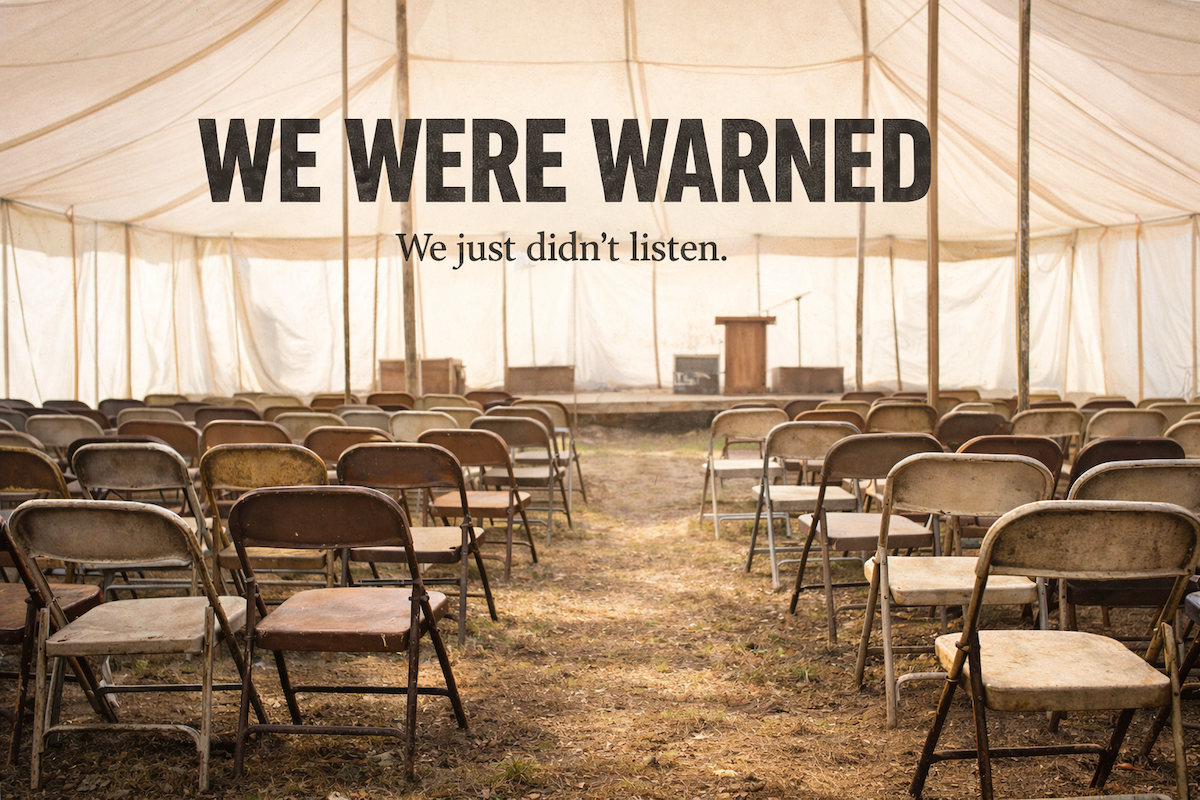
Mind if I rant a little?
Last year I read about 80 books, though only around 75 made it onto my reading list for you to review. Why not list the others? Because a number of them were about deconstructing faith and many of them came up woefully lacking.
Now, nothing against people who are deconstructing. Just read my last post. God bless you. I’m genuinely glad you are doing some hard work. Honest questioning is long overdue.
But one of my pet peeves with modern evangelical deconstruction is the assumption that no one warned us. That the failures of contemporary evangelicalism — its shallowness, certainty, commercialization, and moral incoherence — were invisible until a new generation finally tugged on a thread and watched the sweater unravel.
Except…there’s a slight problem. That part about nobody warning them? It isn’t true.
The church has been warning itself for centuries. Augustine of Hippo, Catherine of Siena, Martin Luther, Søren Kierkegaard, Julian of Norwich, Dorothy Day, Dietrich Bonhoeffer, Flannery O’Connor, T. S. Eliot.
Even the late great Tony Campolo for crying out loud.
People just didn’t listen. Maybe because you were too busy consuming Left Behind books and mistaking certainty for depth.
What’s new in this faith deconstruction trend is not the diagnosis. What’s new is the refusal to listen to all the voices of warning over the past two thousand years.
See, we evangelicals built a celebrity culture. Then when those celebrities finally found the courage to admit their theology was lacking, we handed them microphones and bestselling book contracts. We called them brave for speaking out. Heroes even. We made them, please catch the irony, celebrities again.
But there was already a deep and costly tradition of warning voices. They just weren’t as marketable.
I’ll skip past the first 1900 years of warnings and get right to my favorite mid-20th century prophet, Flannery O’Connor. Have you ever read Wise Blood? I doubt any of the celebrity deconstructionist have. The book reads like a contemporary critique of evangelicalism, yet it was published in 1952.
Flannery saw performative faith, religious spectacle, certainty without mercy, and salvation reduced to slogans. And she skewered it mercilessly. Be forewarned, this is an edgy book.
What makes O’Connor uncomfortable for modern deconstructionists is that she refuses to flatter unbelief. Her characters reject bad religion for good reasons, and are still wrecked by the attempt.
O’Connor’s point is devastating: the church didn’t fail because no one noticed the problem. It failed because it ignored its own prophets long enough to produce people who could no longer imagine faith without violence or self-punishment.
Back to my rant: modern deconstruction often speaks as if it has discovered hypocrisy, shallow theology, or spiritual abuse.
It hasn’t. It’s new to them, because they weren’t listening, weren’t paying attention, and were more enthralled with platforms than with truth.
One such celebrity Christian leader has a bestselling book about deconstructing. A friend of mine is acting as a spiritual guide for this particular leader. When my friend asked for my input about what to say, I laughed and said, “How about simply “welcome to the real church” and ask where were they all these years?”
Am I being harsh? Like an old curmudgeon shouting at brats to get off my lawn?
Probably. But that’s what I do well.
None of this means deconstruction questions are illegitimate. Most are overdue. But there’s a difference between honest reckoning and historical amnesia. If we don’t recognize that our spiritual tradition itself has been critiquing these failures all along, we risk mistaking departure for depth, and novelty for courage.
Or to be more blunt, we shift from one media platform to the next. From one media whore to the next.
That’s not deconstruction. That’s merely replacing one idol for another.
Rant over. For now.