
Help My Unbelief
If you asked me to choose one passage that best captures the strange relationship between faith and doubt, I’d probably land on Mark 9:24: “I believe; help my unbelief.”
That may be the most honest prayer in the entire Bible.
The scene itself is chaotic.
Jesus has just come down from the Mount of Transfiguration — that bizarre moment where Moses and Elijah appear, God speaks from heaven, and Peter immediately starts saying weird things about building shelters because apparently that felt like the right contribution to the moment.
Then Jesus walks down the mountain into real life.
And real life is messy.
A desperate father has brought his afflicted son to the disciples for healing. The disciples fail spectacularly. A crowd gathers. An argument breaks out. Everyone seems frustrated.
Honestly, it feels a lot like modern church life.
The father turns to Jesus and says: “If you can do anything, take pity on us and help us.”
There’s faith in that sentence. But there’s doubt too.
And after watching the disciples fail, can you really blame him?
Jesus basically responds: “If???”
Then comes the line that has echoed through centuries because it sounds painfully familiar. The father responds: “I believe; help my unbelief.”
There it is.
Not polished certainty. Not artificial confidence. Not a carefully curated testimony.
Just honesty.
The father does not resolve his doubt before approaching Jesus. He brings the confusion with him. That matters.
Over the last few weeks I’ve written about doubting disciples and the confident faith of the centurion. But this father feels different. More personal. More familiar.
Because most of us do not live permanently in the confidence of the centurion. And most of us are not standing dramatically on stormy water like Peter.
Most of us live right here: “I believe; help my unbelief.”
I have believed. I do believe. I will believe.
But some days faith and fear get tangled together. Some days confidence and uncertainty share the same room in my head. And apparently Jesus is willing to meet people there.
That’s the remarkable thing about this story.
Jesus does not shame the father for his imperfect faith. He does not demand cleaner theology, stronger confidence, or emotional certainty before responding.
He heals the boy.
Which means the miracle arrives while the man is still conflicted. That should encourage a lot of us.
Honestly, I sometimes wonder what would happen if we became a little more honest with each other. What if someone opened a church service by praying: “Lord, some of us believe deeply today. Some of us are hanging on by a thread. Most of us are probably somewhere in between.”
Or even more simply: “God, I don’t know if you’ll hear this or not, but ….”
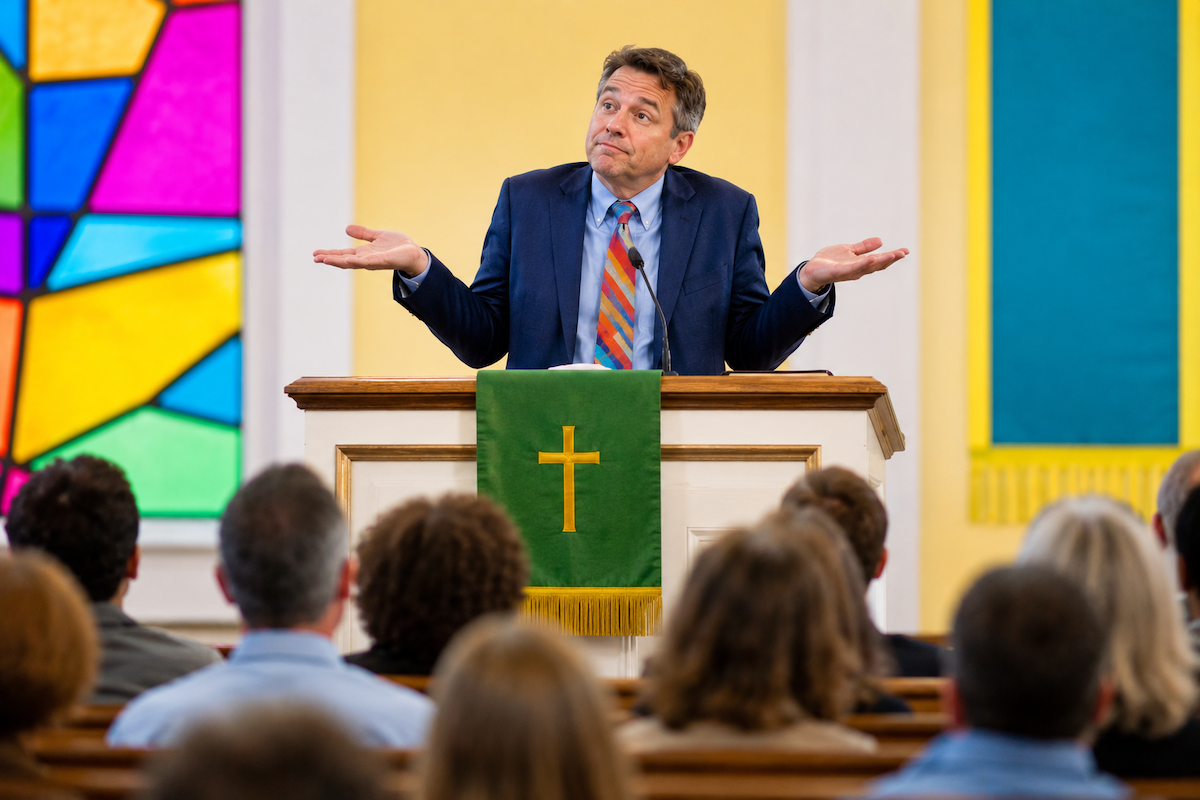
What if a pastor occasionally admitted: “Yeah, I have doubts sometimes too.”
What if Christians spent less energy protecting appearances and more energy telling the truth? What if we were just honest enough to admit that faith is sometimes complicated.
I want to be around people like that.
And if I somehow am resurrected into a new life, I suspect I’ll spend a few minutes laughing with Peter about the shelters he wanted to build on the Mount of Transfiguration. That story is just too good to ignore.
Then I’ll hug people I’ve missed for years. And my dogs too, because they’ll be there waiting for me.
But eventually I want to find the father from Mark 9.
I want to sit down with him, raise a glass of wine, and thank him for saying out loud what so many believers quietly feel.
“I believe; help my unbelief.”