
The Sanitization of Doubt
The ironic thing about confidence is its comfort with doubt. This struck me over 30-years ago when I was leading a bible study at my church. As an elder, with a mandate to model faith, I wasn’t supposed to have doubts.
But we all have doubts. When I admitted this to the study group, there was an interesting blend of surprise and admiration. Some people were openly perplexed – how could I call myself a Christian, a person of faith, an elder, and a teacher, if I had doubts? Still others smiled and thanked me for my honesty because they too had doubts and were afraid of saying so.
I explained to the perplexed that it was actually my deep faith that gave me the confidence to express doubt. They still didn’t get it. To be honest, I can see why. It’s a conundrum of sorts; faith gives me confidence which allows room for doubt.
We need to grow more comfortable talking about our doubts.
My faith tradition makes some outrageous bold claims. Want a few? Jesus is God incarnate. He was both fully human and fully divine. He was executed. He rose from the dead. He ascended to heaven. He’s active today. We celebrate him by metaphorically eating his body and drinking his blood.
These are wild claims for anyone who is not a believer. At best they sound mystical. At worst they sound ridiculous. Even for those of us who believe these claims are true, is it really surprising that doubts occasionally surface?
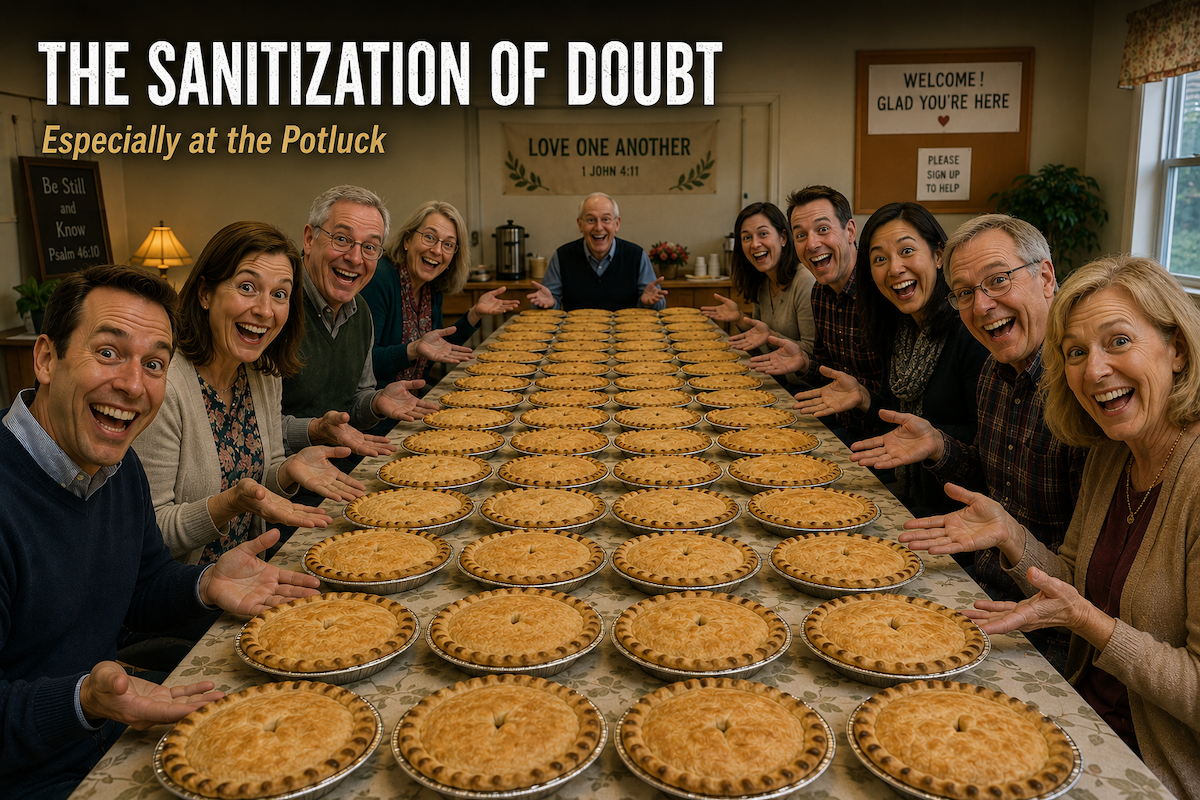
The culture surrounding our faith – whether churches, seminaries, mission orgs, or simply the upcoming potluck – is rarely a safe place for doubt. (It’s fiction, but this is brought to life when Jayber Crow has a conversation with Dr. Ardmire.)
We have sanitized doubt. We treat it like a virus that has to be stopped before it spreads. We want everyone to think alike and act alike. It’s almost like we want everyone to bring the same cherry pie to the potluck.
We often still harbor doubt, but we have become skilled at modeling certainty. Honesty about our doubt is replaced with fear about how others will judge our doubt.
In a recent conversation, a friend told me that he’s been lazy with his generosity. What he meant was that he’d make a gift, often a significant gift, but avoided the harder job of building a relationship with the recipient.
I think we’ve become lazy with our doubt.
A person with doubts can be confident too. Doubt can drive curiosity. A curious person asks hard questions. Doubts keeps us humble. It keeps pushes us to do our research.
These are good things. They should be celebrated.
Because being honest about our doubt is spiritually stronger than hiding it.
So add some doubt in your life. Though maybe not at the potluck.