
I Write About Seeing
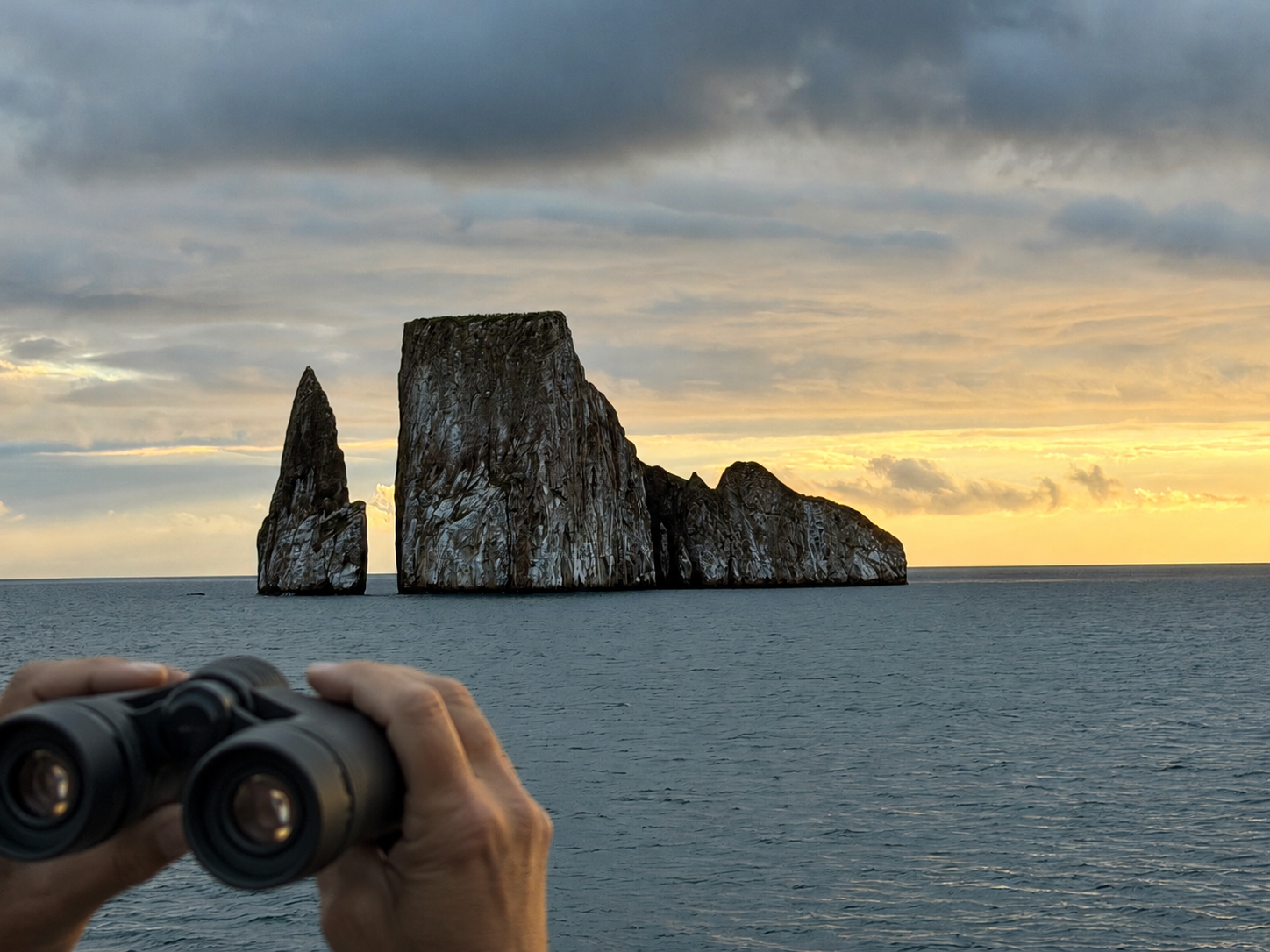
Last June I had the opportunity to visit the Galápagos Islands.
The trip was organized by a group that encourages faith-inspired generosity. They hired First Century Voyages to handle the logistics, who in turn chartered one of the National Geographic ships that specialize in the region.
It was the passion of generosity hiring exceptional professionalism, which in turn tapped into passion.
One of the principals of First Century Voyages is Karl Johnson (along with his wife Julie, who is the real leader of the company). Karl also serves as Executive Director of the Consortium of Christian Study Centers. We connected on several levels, including a shared love for God’s creation.
A few weeks ago Karl sent me an essay he’d written about Frederick Buechner’s view of the natural world. It’s well worth reading. (Here is the link.)
One paragraph, in particular, stopped me in my tracks:
“The world as it might be, Buechner says, is the real world, and to see others and the world in this way is to catch a glimpse of glory. The glimpse may be temporary, but the hope it provides is concrete.”
I’ve read that sentence a dozen times now.
“The world as it might be is the real world.”
At first glance, that sounds backwards. Most of us assume the world “as it is” is reality. Bills are real. Wars are real. Rust is real. Broken relationships are real.
Hope, on the other hand, can feel like wishful thinking—a pleasant escape from the facts. Buechner flips that upside down. What if God’s Kingdom isn’t an escape from reality but reality itself?
If that’s true, then faith isn’t pretending things are better than they are. It’s learning to see what is most real.
The more I thought about that, the more I realized this has been a hidden theme of Junkyard Wisdom all along. People often assume I write about old cars, junkyards, and salvaged things. That’s true. But it’s deeper than that.
I write about seeing.
A junkyard teaches you that appearances are rarely the whole story. Most people walk through a wrecking yard and see twisted metal, broken glass, and piles of parts.
The owner sees something different. He sees a useful fender. An engine with another hundred thousand miles left in it. A battery that still has some spark. He sees possibility where everyone else sees scrap.
Maybe the rest of us need to learn to see people the same way.
The world has a way of labeling us by our worst day. Failure. Divorce. Addiction. Prison. Bankruptcy. Regret.
God has another way of seeing. God doesn’t ignore our brokenness. God simply refuses to believe brokenness gets the final word.
When Jesus looked at people, he consistently saw more than anyone else could see. A fisherman became a rock. A tax collector became a son of Abraham. A persecutor became an apostle. He saw people not only as they were but as they were becoming.
Maybe that’s what grace does. It teaches us to see through the rust. Not by denying the rust. Not by pretending it isn’t there. But by recognizing that rust doesn’t define the vehicle.
Perhaps that’s why I love old cars so much. Most people see an old truck. I see stories. Craftsmanship. Adventure. Potential. A future hidden beneath faded paint and surface corrosion.
Maybe that’s why I love people, too. (Or at least why I’m trying to.)
Seeing the world this way changes everything. Suddenly the question isn’t, “What is this?”
It’s, “What might God make of this?”
Faith is not believing something that isn’t real. It’s learning to see what is most real. And it was a visit to the Galapagos, with some amazing people, who reminded me of this.