
Doubting Saints
Last week I wrote about doubt. It’s worth looking at a few biblical examples because, frankly, a lot of bible characters were not exactly poster children for emotional consistency.
And maybe that’s good news.
The funny thing about hiding our doubts is that they usually coexist with our faith. Uncomfortably, perhaps, but both exist. Yet we are quick to advertise our faith, and hide our doubt.
The disciples are a perfect example.
The obvious starting point is Thomas, forever branded “Doubting Thomas,” which feels a little unfair. In John 11, Thomas is the courageous one. Jesus is heading toward danger and Thomas basically says, “Fine. Let’s all go die with him.”
That’s not doubt. That’s conviction.
But by John 20, Thomas is openly skeptical of the resurrection itself. He wants evidence. He wants proof. He wants to touch the wounds.
That’s a pretty dramatic swing. And, honestly, I can totally relate. I’d doubt too.
Then there’s Peter, who sometimes seems emotionally powered by twelve espresso shots.
One minute he’s standing in a boat during a storm yelling through the wind, “Lord, if it’s really you, tell me to come to you on the water!”
Think about that sentence. It contains doubt and faith simultaneously.
“If it’s really you…”
“…tell me to come.”
The other disciples must have thought Peter had lost his mind.
Then Peter actually climbs out of the boat and walks on water. For a moment, his faith overpowers his fear.
Then he notices the storm. Then he panics. Then he sinks.
Faith, fear, courage, doubt — all tangled together in the same story.
Philip wasn’t much different.
Jesus says, “Follow me,” and Philip leaves everything behind to do exactly that. That’s enormous faith.
But later, after Jesus declares: “I am the way and the truth and the life.”
Philip responds with what essentially amounts to: “Okay, but could you just show us the Father?”
At some point you can almost hear Jesus sighing.
And then there’s the storm in Mark 4. The disciples are terrified while Jesus somehow sleeps through the chaos like a man who took cold medicine before boarding the boat.
Finally they wake him with an accusation: “Don’t you care if we drown?”
That’s more than fear. That’s doubt about Jesus himself.
Jesus calms the storm and then questions why they are so afraid.
But even after all these stories, and many more, notice something important:
Jesus keeps them around anyway.
That’s the remarkable thing about the disciples. Jesus never demanded perfect emotional consistency before allowing them to follow him.
These guys moved constantly between confidence and confusion, courage and fear, clarity and uncertainty. Sometimes within the same conversation.
And apparently Jesus considered them qualified anyway.
Even after the resurrection, doubt still lingered. Matthew 28 says: “When they saw him, they worshiped him; but some doubted.”
Just imagine that sentence.
They worshiped. And doubted.
At the same time.
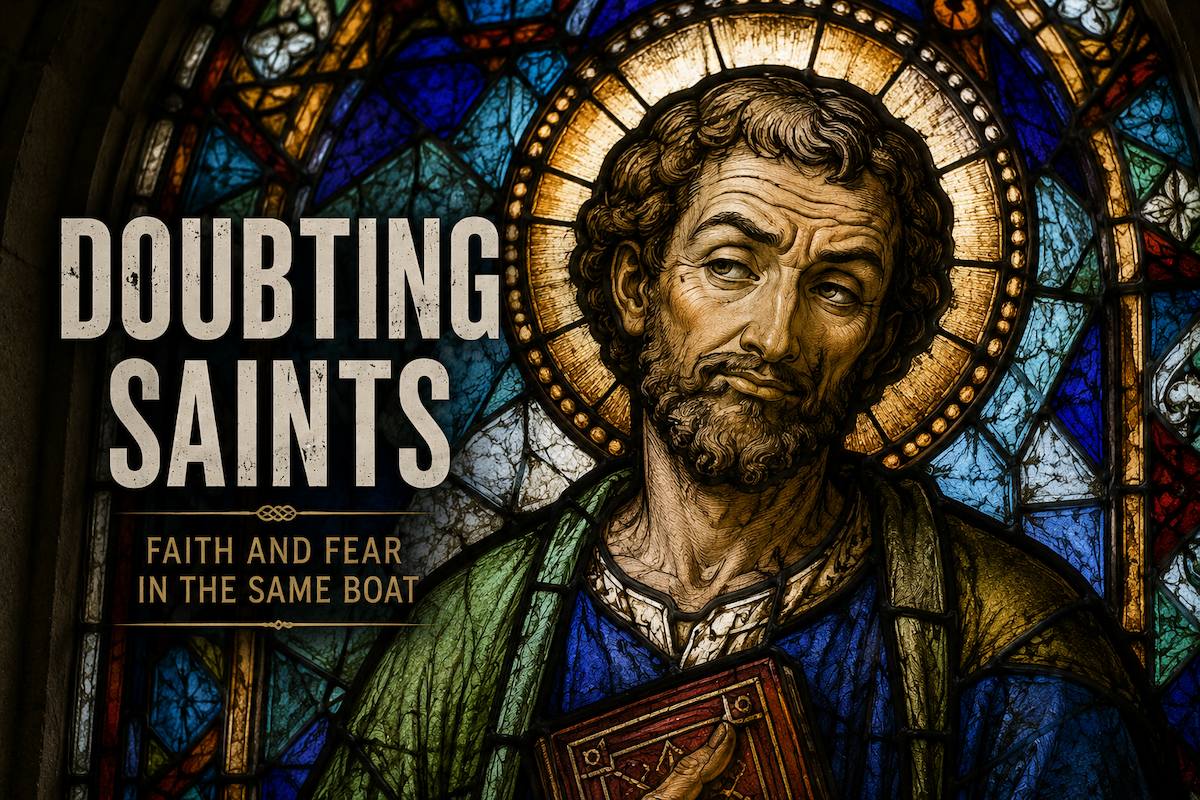
They were doubting saints.
And if we’re honest, so are we.