
The Centurion
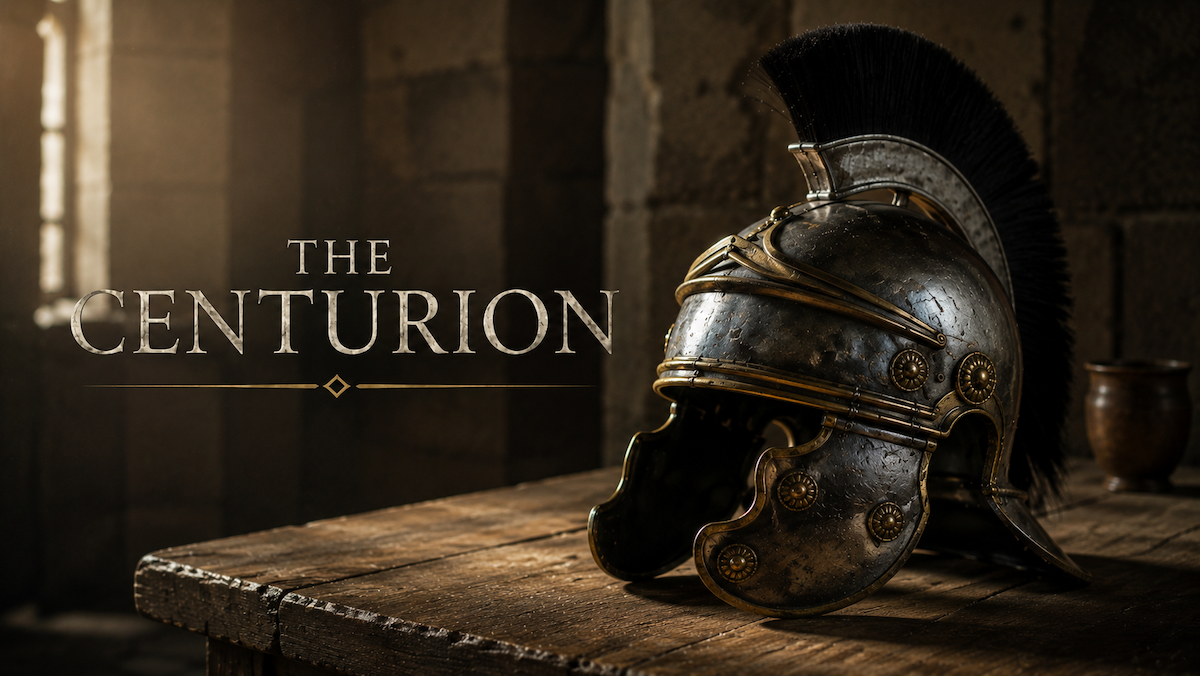
My recent posts have focused on doubt. Not because I’m pro-doubt, but because I think we have become uncomfortable with honest questions. We’ve created cultures where uncertainty feels dangerous, so people hide it.
That’s unhealthy.
But let me push the pendulum back the other direction for a moment.
In a world full of cynicism, outrage, and skepticism, there is still something deeply compelling about confident faith.
Which brings us to the centurion in Matthew 8.
This man radiated confidence. He gave orders and people obeyed them. He understood authority. More importantly, he recognized authority in Jesus.
That’s what made his faith so remarkable.
The centurion tells Jesus he doesn’t even need to visit his home to heal his servant. Just say the word. That’s enough. The centurion understands how power works. Authority speaks and things happen.
And Jesus is astonished.
Think about that for a moment.
This Roman soldier somehow saw more clearly than the religious experts and, at times, more clearly than the disciples themselves.
What fascinates me most about the centurion is his ability to hold difficult things together.
He was a Roman officer occupying a foreign land, yet he was respected by the local Jewish community. He was clearly tough — you don’t become a centurion by being emotionally fragile — yet he cared deeply about a servant. He understood command and discipline, but he also understood humility. He possessed political power, military authority, financial influence, and yet somehow approached Jesus without arrogance.
That combination feels rare.
Especially now.
Modern culture increasingly demands simplification. Pick a tribe. Pick a side. Pick a slogan. Stay inside your lane. Hate the people you are supposed to hate.
The centurion seems uninterested in all of that.
He moved comfortably across cultural, ethnic, political, and religious boundaries in pursuit of truth and healing.
And Jesus admired him for it. That’s worth noticing.
Peter could move from courage to fear in a matter of seconds. Thomas could swing from loyalty to skepticism. The disciples often held faith and confusion together at the same time.
The centurion represents a different kind of faith. Less emotional volatility. Less visible uncertainty. More settled confidence.
And honestly, the Church needs people like that too.
Not loud certainty. Not performative certainty. Not the kind that screams at people online in all caps.
Just confidence rooted in humility.
We don’t know enough about the centurion to know whether he wrestled with doubts of his own. I suspect he probably did. Most thoughtful people do.
But what stands out is this: he didn’t allow complexity to harden him into cynicism.
That may be one of the rarest spiritual qualities left.
Wouldn’t it be refreshing to be surrounded by people like that?