
Curated Certainty
I spoke at an event last month and found myself ranting about certainty.
Not conviction. Not confidence. Certainty.
Churches have it. Denominations have it. Theologies have it. We all seem to have a system that explains exactly how God worked in the past, is active today, and will do in the future. Give us a whiteboard and in fifteen minutes we’ll turn faith into a ten-step program.
I understand the temptation. Certainty is comforting. But faith and certainty aren’t the same thing.
A few days later I finished reading N.T. Wright’s newest book. He makes a compelling case that when Jesus returns, it won’t be as a rescue mission to evacuate everyone to heaven. Instead, it will be the beginning of an entirely renewed creation.
Now, I have no idea whether Wright is right. It feels right. But that isn’t saying much.
What struck me was not his conclusion. It was the reminder that people have always been remarkably confident about what God is about to do.
The Pharisees had a system. The Sadducees had a system. The Zealots had a system. The Romans had a system. Even the disciples had a system.
Then Jesus did what he did.
Nobody got what they expected.
The Messiah didn’t overthrow Rome.
The kingdom wasn’t political.
The revolution wasn’t armed.
The outsiders kept getting invited in.
The insiders kept getting rebuked.
The blind saw. The dead rose. The sinners were forgiven. The experts were confused.
And perhaps most amusing of all, the people most certain about God often seemed least prepared for what God was doing.
That observation connects to my recent posts about doubt.
The history of God interacting with humanity is astonishingly, frustratingly, and wonderfully unpredictable. Which makes me wonder, what if Jesus returned today?
Not in a flash of light. Not with the sky splitting open. Not with a soundtrack. Not as the result of some war in the Middle East or some theatrical worship service calling for his coming.
What if Jesus showed up quietly?
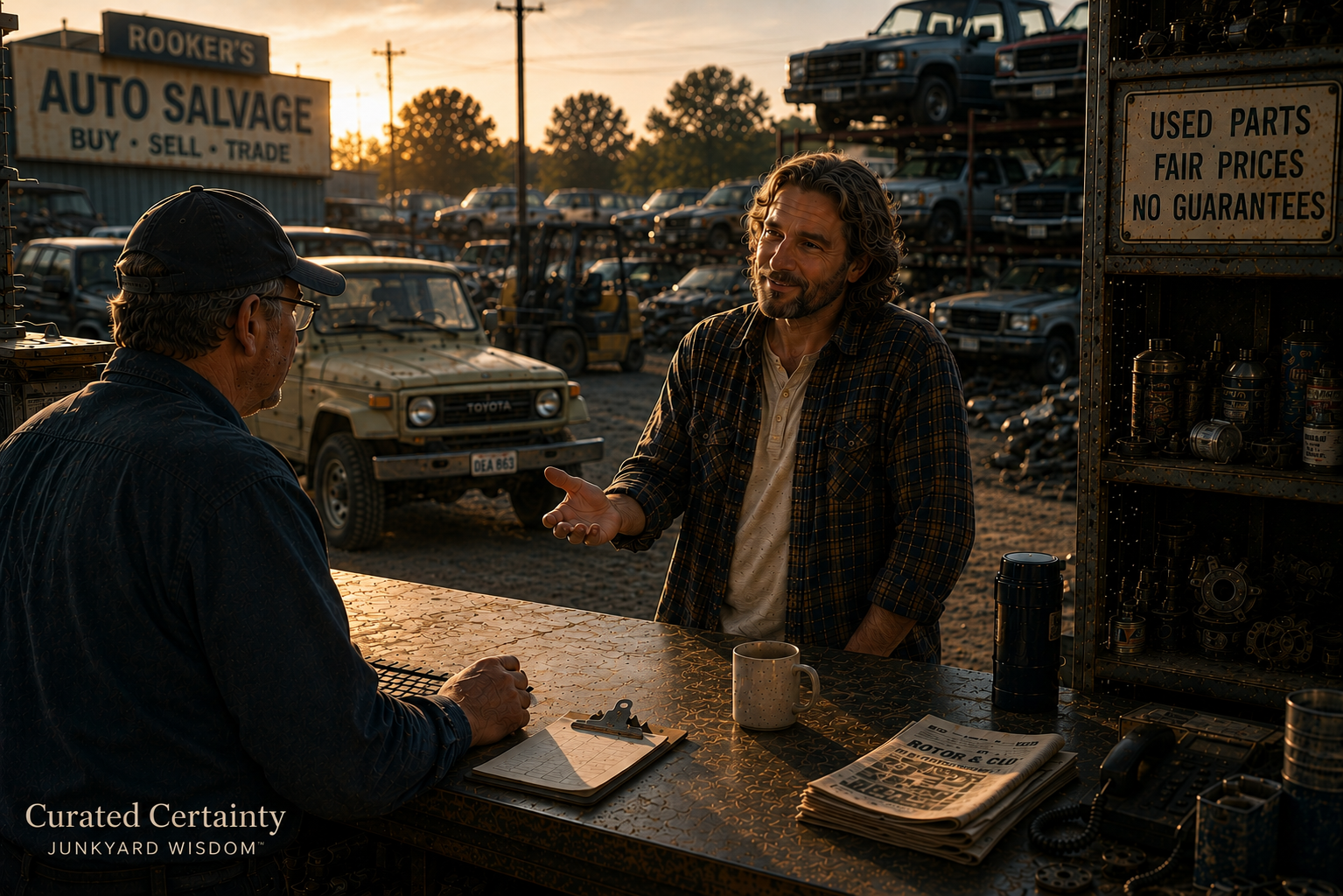
What if he wandered into a wrecking yard one Tuesday afternoon and asked whether anyone had a set of brake drums for an old Toyota Land Cruiser?
Nobody recognizes him. He isn’t trying to be recognized. He doesn’t start a podcast. He doesn’t launch a movement. He doesn’t post cryptic messages online. He doesn’t seem particularly interested in defending anyone’s theological system.
Instead, he listens.
He asks questions.
He smiles occasionally.
People explain exactly how the world works, how God works, and how history will unfold.
He nods politely. And says nothing.
What are we going to do with a Jesus like that?
What if he doesn’t endorse our tribe?
What if he doesn’t quote our favorite theologians?
What if he doesn’t fit neatly inside our charts and timelines?
What if he is every bit as surprising the second time as he was the first?
The first-century experts were convinced they knew what God was about to do.
Then God did something else.
History suggests we should hold our certainty a little more loosely. Not our faith. Not our hope. Just our certainty.
Because if Jesus has taught us anything, it’s that God has a habit of showing up where nobody expected him.
Sometimes even in a wrecking yard.